
Clay County Arrest History
Clay County arrest history begins with the agency that took a person into custody. The Clay County Sheriff's Office handles arrests in unincorporated areas, serves warrants, investigates reported crimes, and maintains booking and bond reports. Fort Gaines law enforcement may create a city incident file. Georgia State Patrol, GBI, and Georgia DNR officers can also make arrests tied to highways, assisted investigations, or Lake Walter F. George. Their report remains with the arresting agency even when the sheriff or another jail handles booking.
Booking staff record identity, intake charges, warrants, time, property, fingerprints, a photograph, custody, and bond data. Fingerprints can connect that arrest cycle to the Georgia Crime Information Center. A judge then addresses first appearance and bond, and a prosecutor decides what charges to file. Those later decisions can change the account. Clay County arrest records are thus time-stamped layers, not a final statement of guilt.
GBI's official services hub identifies the statewide record channels.
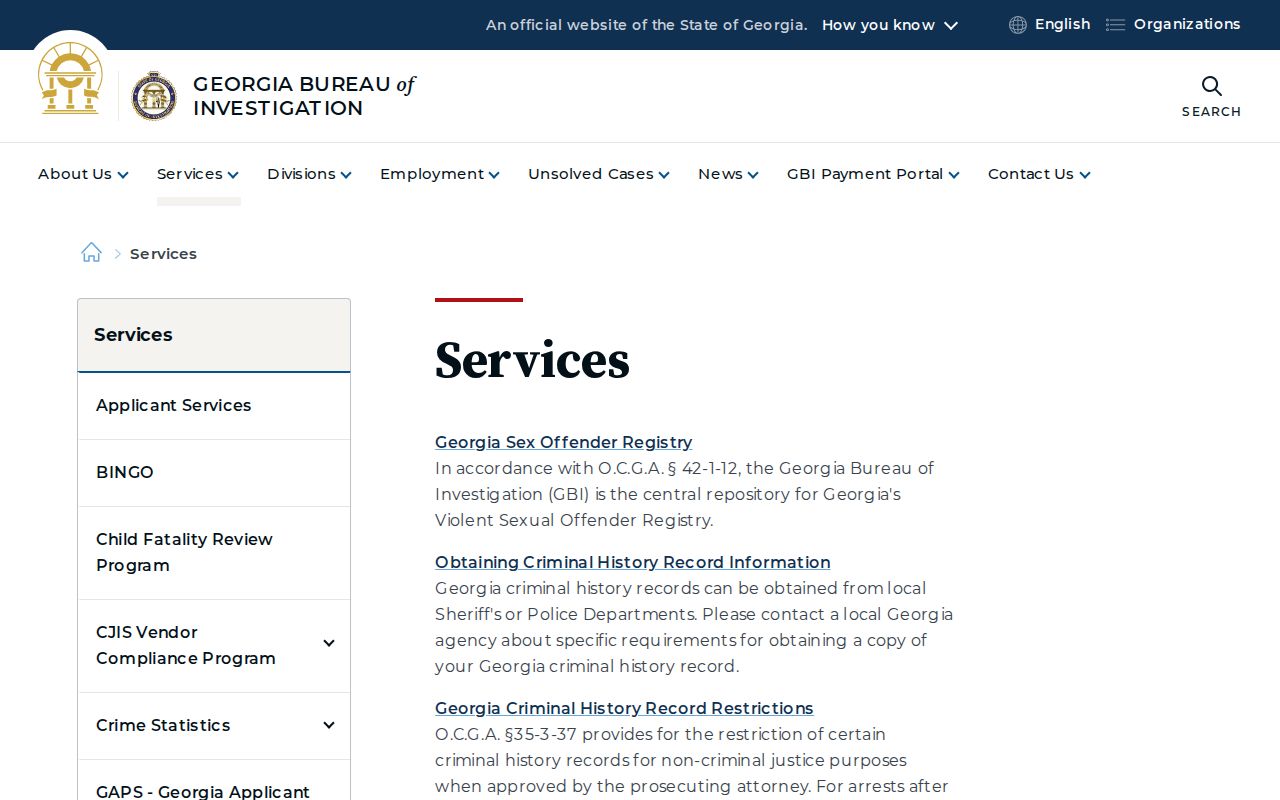
The state services view places local arrest reporting within the broader GCIC system without turning it into a live booking search.
Clay County Has No Blotter
No official public Clay County daily booking log, arrest blotter, jail roster, or verified sheriff app was found. That gap makes the sheriff's phone and records channels the official starting point. It does not justify using a private mugshot or people-search site. Such sites may repeat old intake data without the court's later dismissal, amendment, acquittal, or disposition.
The official GDC Clay County Jail directory entry gives a post-office box and the sheriff's main number, but it does not state the present physical detention site. An older state plan said Clay County housed prisoners under contract in Miller County. Since the current directory and old plan do not settle today's location, callers should ask where the person is actually held before planning a visit, sending mail, or arranging funds.
Clay County's official sheriff page documents the duties behind this phone-first process. The state jail entry provides a useful view of that official fallback.
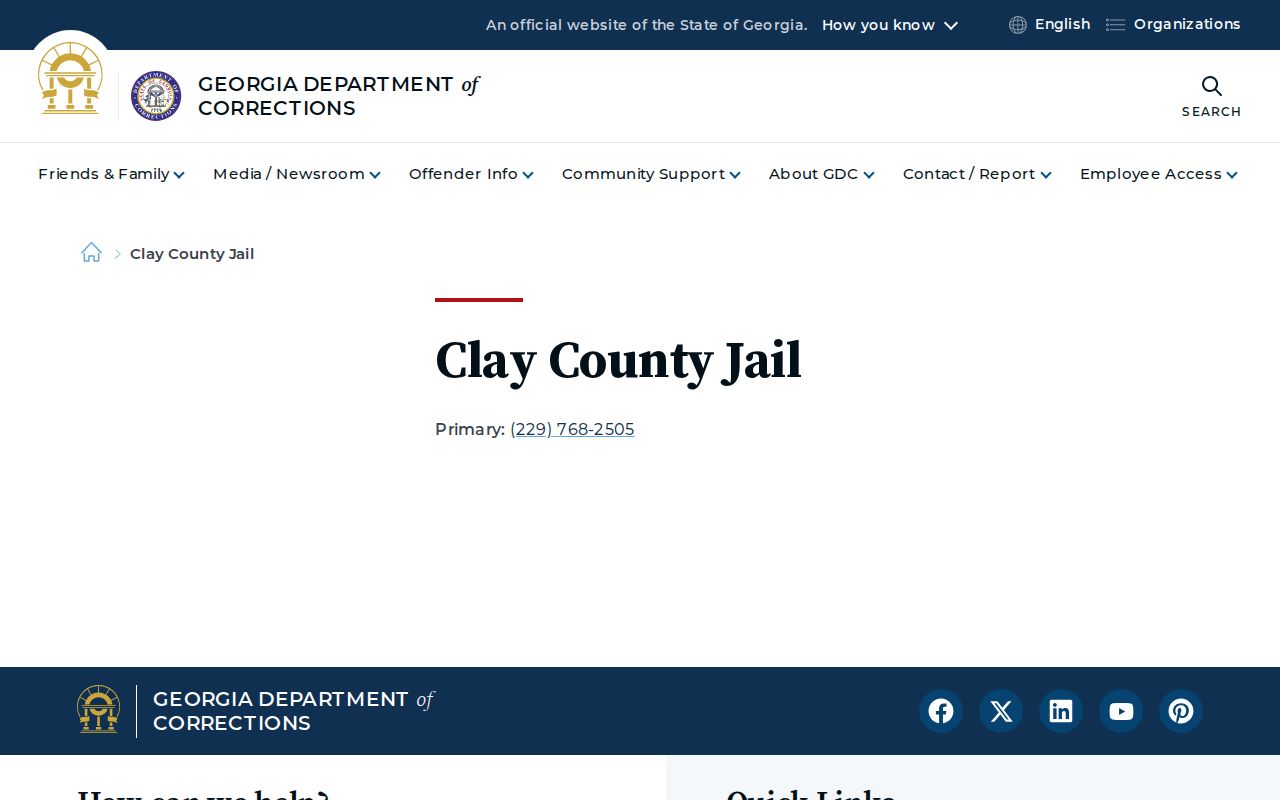
The image reinforces why a direct call is needed: the listing identifies the local contact but does not supply a public roster or confirmed street location.
Looking Up Clay County Arrests
Use a full name, an approximate arrest or booking date, and the agency or location if known. A booking number, incident number, warrant number, or court case number can narrow the search. Work through every relevant Clay County arrest channel because each answers a different question.
- Call the Clay County Sheriff's Office at (229) 768-2505. Ask whether the person was booked in Clay County, transferred, released, or held at another facility.
- Request the incident or arrest report from the agency that made the arrest. For sheriff records, use phone, email, fax, mail, or the counter at 124 Thomas Street.
- Contact the proper clerk after charges are filed. Clay Superior Court holds felony case records; Probate, Magistrate, or a municipal clerk may hold narrower matters.
- Use the Georgia Crime Information Center route to inspect your own statewide history. Reporting can lag, so compare it with the clerk's certified disposition.
- Use GDC Find an Offender only after a state sentence or transfer. It is not a live Clay County booking search.
For a formal request, describe an existing record rather than asking the office to investigate or create an answer. Ask about cost before copies are made. A response under the Georgia Open Records Act is generally due within three business days, but that response may give a later production date or lawful estimate.
Clay County Sheriff's Record Routes
The sheriff site does not name a separate Records Division, so direct requests to the office itself. Email claysheriff@claycountyga.net with the record type, date range, incident or booking number if known, subject or location, desired format, and contact details. Fax requests go to (229) 768-3471. Mail may be addressed to the Open Records Custodian at the sheriff's street address. Confirm receipt and payment terms.
Clay County Sheriff's Office
124 Thomas Street
Fort Gaines, GA 39851
(229) 768-2505
Booking, bond, custody, arrest reports, warrants, fingerprints, and county criminal-history inquiries.
In-person visitors should ask about current counter hours. Identification may be needed for inspection of one's own history or restricted material. Ordinary reports can still have victim, child, medical, juvenile, security, or active-investigation details redacted. Clay County publishes no local arrest-copy fee schedule, so request an estimate before reproduction.
Inside a Clay County Arrest Record
A Clay County arrest record may combine agency report fields with a separate booking file. Availability depends on the request and lawful redactions. The sheriff states that it maintains booking reports, fingerprints, photographs, criminal histories, and inmate information, but it does not publish a sample output. The neutral inventory below describes fields to ask for without republishing any arrestee's name or image.
| Identity and agency | Legal name or aliases, arresting agency, booking number, and receiving facility. |
|---|---|
| Time and place | Arrest and booking dates or times, incident location, and release date when available. |
| Charges and warrants | Intake charge text, statute references, and linked warrant or case identifiers. |
| Bond and release | Bond type or amount, custody status, and release reason. |
| Booking identifiers | Fingerprint transaction and agency-held photograph, subject to release rules. |
| Protected fields | Medical, classification, security, victim, and detailed birth data may be withheld or reduced. |
Ask for the exact record needed. An incident report explains the event and probable cause. The booking file shows intake. Neither replaces the clerk's later docket and final disposition.
Identify the Clay County Agency
Clay County sits on Georgia's Alabama border and includes Lake Walter F. George. An event in that setting may involve the sheriff, Fort Gaines authorities, Georgia State Patrol, DNR Law Enforcement, GBI, an Alabama agency, or a federal office. The badge, citation, report number, and place of arrest can identify the creator. Requesting from the wrong office often produces a no-record response even though another custodian holds the file.
Fort Gaines records should begin with the city for events handled by its police, with the sheriff as the county booking fallback. Bluffton callers should ask Town Hall which agency acted, then use the sheriff for county custody. A state highway arrest report belongs with Georgia DPS. A DNR report stays with DNR, while the receiving jail keeps booking data. This split explains why one Clay County arrest can require two or three calls.
Georgia's official Clay County emergency directory confirms the sheriff contact used for county routing.
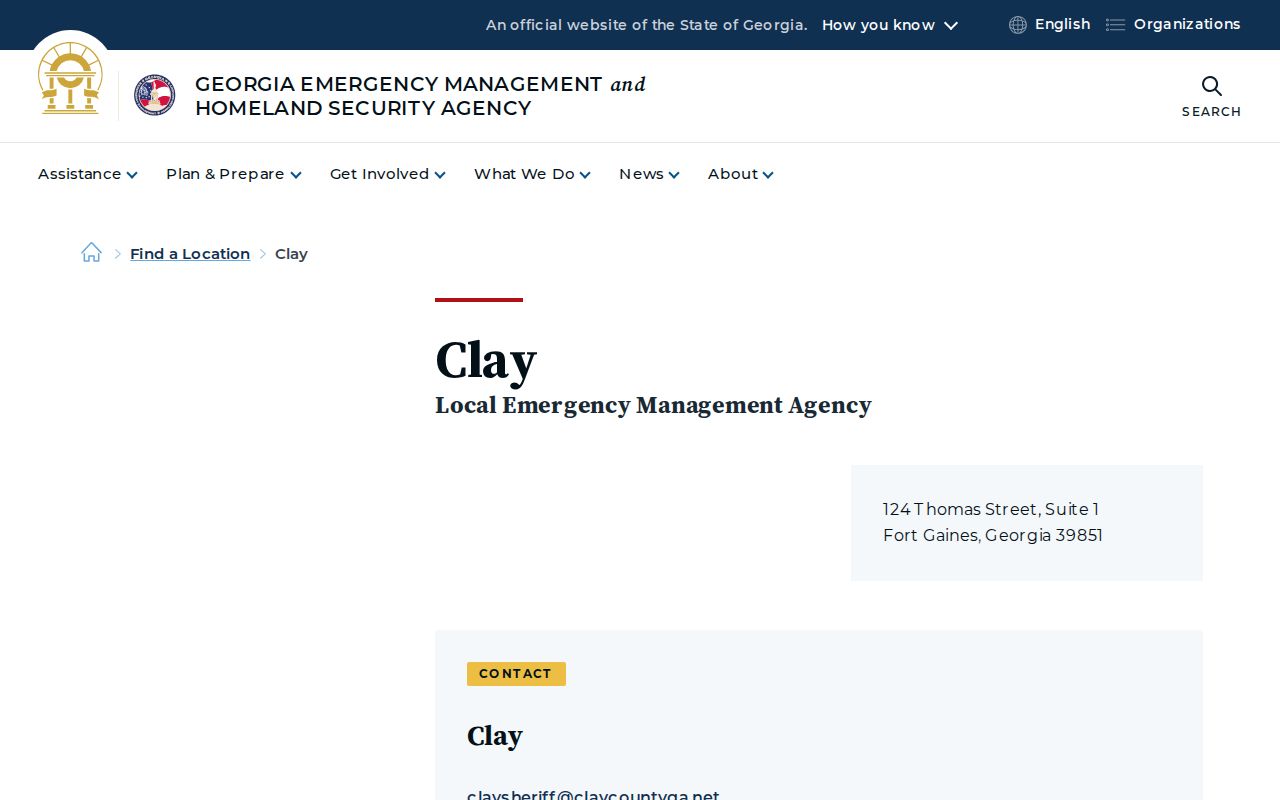
The directory view helps distinguish this Fort Gaines office from same-named Clay County agencies in other states.
Clay County Booking Logs and Arrests
Recent Clay County arrest information is available by direct inquiry, not through a public web log. Give the sheriff a full name and approximate arrest time. Ask for the booking number, current facility, intake charges, bond, responsible court, and release status. If staff says the person was transferred, get the receiving facility's exact name and phone number before ending the call.
A recent booking may not yet appear at GCIC, in a court file, or in GDC. GCIC depends on fingerprint and disposition reporting. Court records begin as judicial and charging events occur. GDC serves state correctional custody after sentence or transfer. A missing result in any one system is therefore not proof that the arrest did not occur.
The GBI criminal-history FAQ explains the statewide record layer.
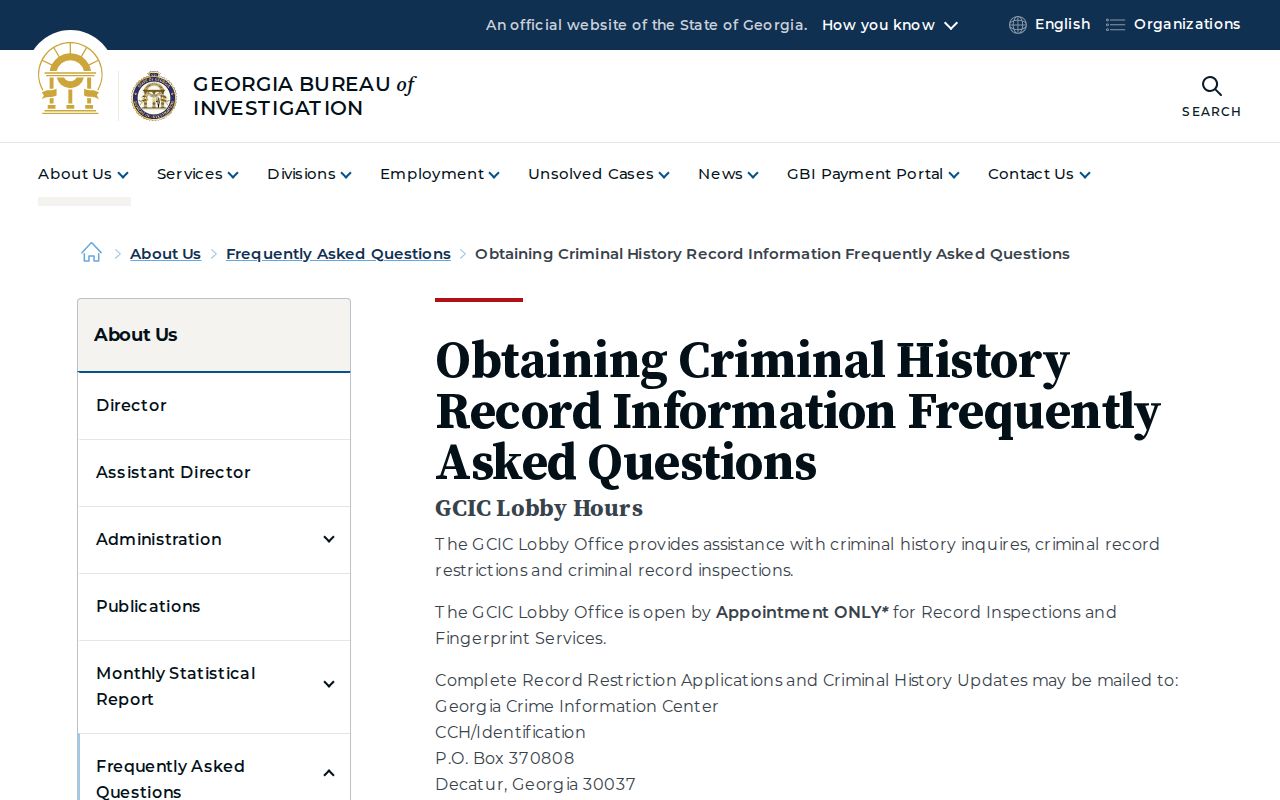
This state guidance helps separate a GCIC history from the live custody answer supplied by the Clay County sheriff.
Note: Confirm the present facility before using any visitation, mail, phone, or deposit service, since Clay County has not published those details.
Clay County Arrests Reach GCIC
Booking fingerprints link a Clay County arrest cycle to identity more reliably than a name alone. The arresting or booking agency submits the supported event to the Georgia Crime Information Center, which maintains the state's Computerized Criminal History. Prosecutors and courts later report disposition data. A delay or missing submission can leave the state history behind the current clerk file.
Someone reviewing their own record should first obtain the GCIC information, identify the arrest cycle or missing outcome, and secure a certified disposition from the proper Clay County clerk. Correction material then goes to GCIC. This path is different from Georgia Felon Search, which is a paid public name-based felony-conviction product and not a complete fingerprint-verified record.
The GCIC system page shows the repository's role.
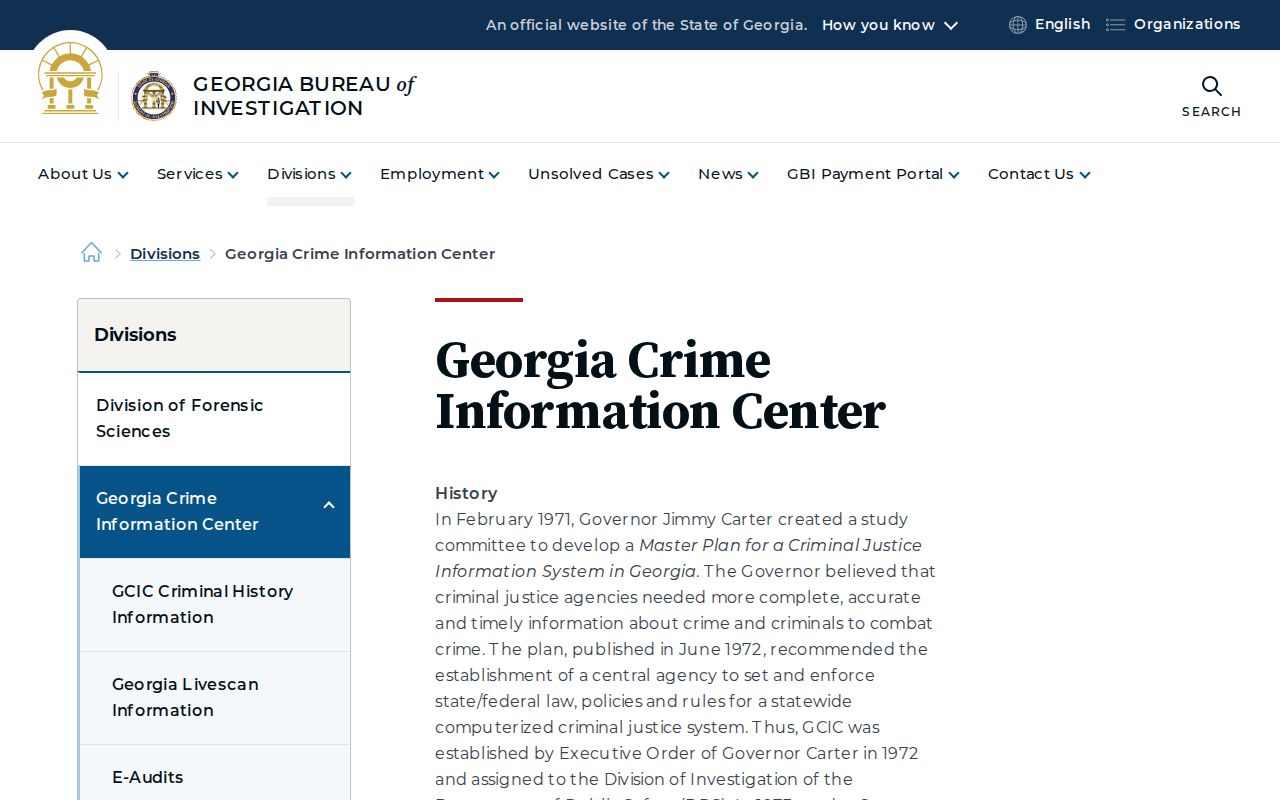
The repository image connects the local fingerprint event to the later statewide arrest and disposition record.
When Clay County Charges Differ
An officer's probable-cause description and booking charge capture the start of a case. The Pataula Judicial Circuit prosecutor may decline, amend, add, or replace charges. A grand jury may return an indictment or no bill. The clerk then records pleas, dismissals, verdicts, sentences, and other outcomes. For that reason, never treat the intake label as the last word.
When the sheriff file and court file conflict, compare identifiers first. Confirm the same person, incident, arrest date, and case number. Then ask the clerk for the accusation or indictment and a count-level certified disposition. If GCIC still shows an outdated or missing result, use that certified court material for a correction request. The fuller Clay County criminal court case record is the right source for filed charges and disposition.
Note: A charge can change without erasing the historical booking entry that accurately recorded what staff entered at intake.
Clay County Arrests Are Not Convictions
A Clay County arrest establishes custody based on a warrant or asserted probable cause. It does not establish guilt. A conviction requires a court adjudication after a plea or verdict. Dismissal, nolle prosequi, no bill, acquittal, or another non-conviction outcome can follow an arrest, and the booking record can still remain as a record of the earlier event.
| Point | Arrest or Booking Record | Conviction Record |
|---|---|---|
| Created by | Arresting agency and receiving jail | Court, then reported to GCIC |
| Meaning | Custody and intake allegations | Adjudication of guilt |
| Best source | Clay sheriff or arresting agency | Proper clerk and certified disposition |
| Timing | At arrest and booking | After plea, trial, and judgment |
| Can charges differ? | Yes, intake charges may change | Shows final count-level outcome |
Note: An arrest is not proof of guilt; verify the final court disposition before drawing any conclusion from a booking entry.